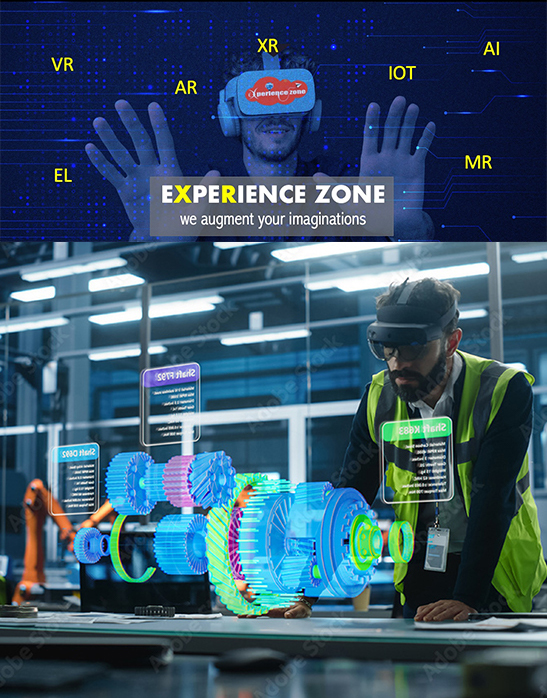
At the secondary school level, building a strong conceptual foundation is essential to shaping future-ready learners. Experience Zone (EZ) enables schools to go beyond textbooks by creating Experiential Virtual Labs β immersive environments where students can explore, experiment, and learn in ways that traditional classrooms cannot provide.
Our XR-based modules in Physics, Chemistry and Biologytransform abstract theories into visual, interactive simulations, making learning not only engaging but also impactful. Students are no longer passive listeners β they become active participants in their own education.
By bridging the gap between theory and application, EZ enables schools to prepare students not just for exams, but for higher education, skill development, and future careers.
π Key Highlights for Schools
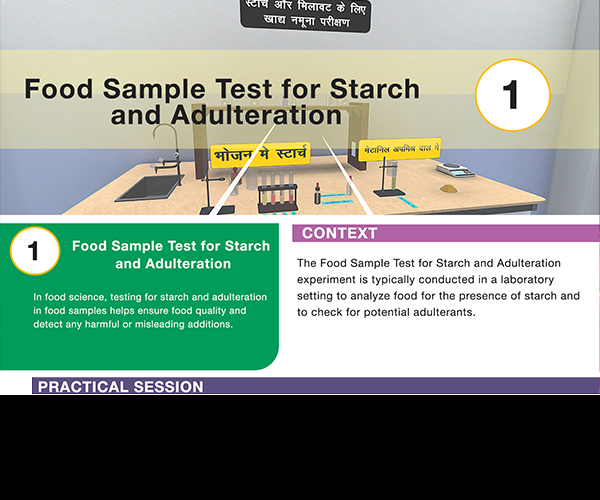
The Food Sample Test for Starch and Adulteration experiment is typically conducted in a laboratory setting to analyze food for the presence of starch and to check for potential adulterants.
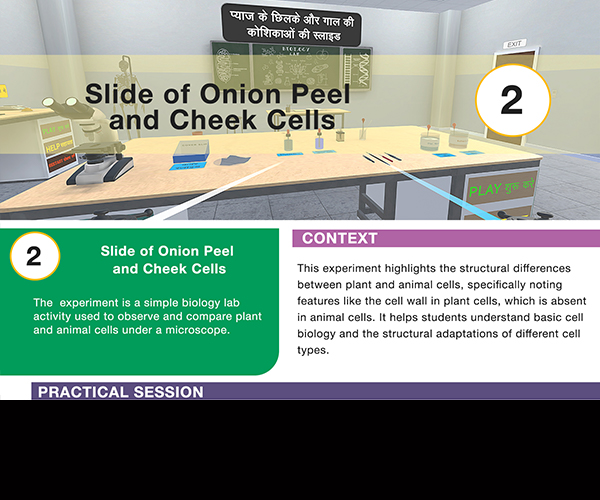
Explore DetailsThis experiment highlights the structural differences between plant and animal cells, specifically noting features like the cell wall in plant cells, which is absent in animal cells. It helps students understand basic cell biology and the structural adaptations of different cell types.
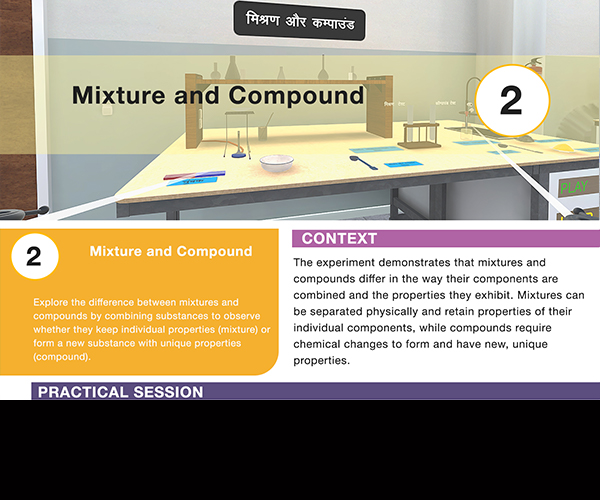
Explore DetailsThe experiment demonstrates that mixtures and compounds differ in the way their components are-combined and the properties they exhibit. Mixtures can be separated physically and retain properties of their individual components, while compounds require chemical changes to form and have new, unique properties.
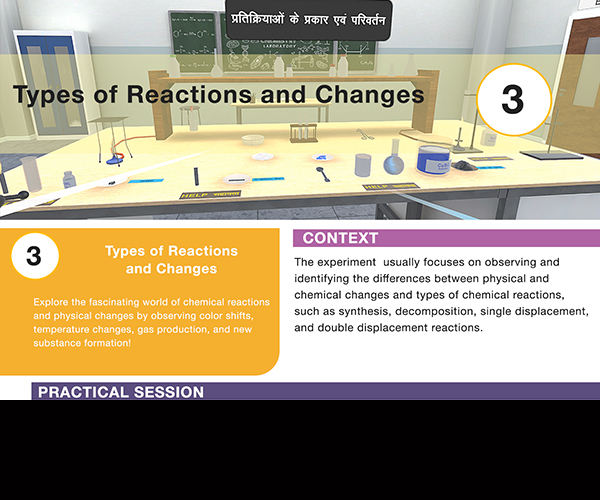
Explore DetailsThe experiment usually focuses on observing and identifying the differences between physical and chemical changes and types of chemical reactions, such as synthesis, decomposition, single displacement, and double displacement reactions.
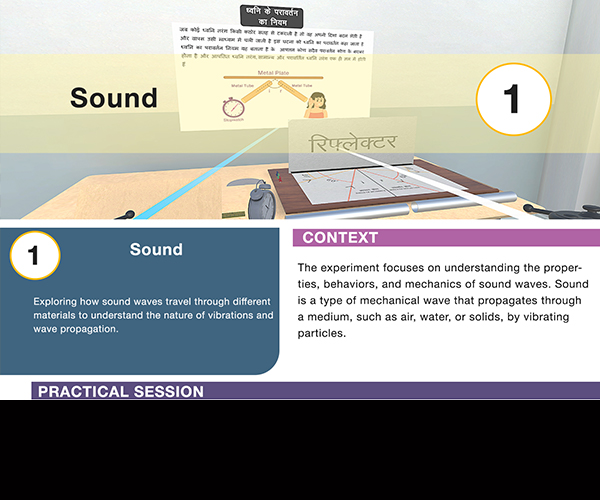
Explore DetailsThe experiment focuses on understanding the proper-ties, behaviors, and mechanics of sound waves. Saund is a type of mechanical wave that propagates through a medium, such as air, water, or solids, by vibrating particles.
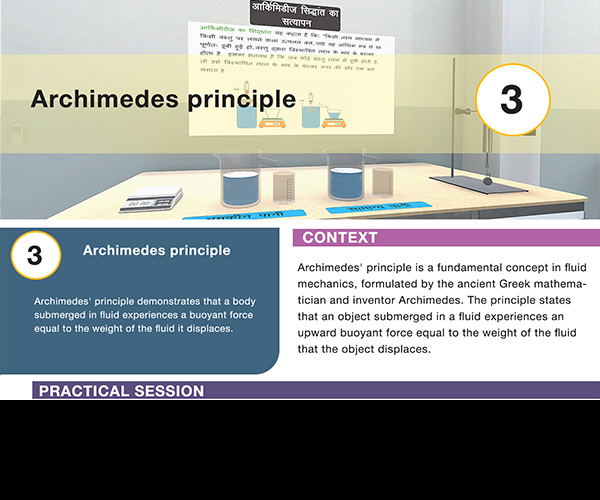
Explore DetailsArchimedes principle is a fundamental concept in fluid mechanics, formulated by the ancient Greek mathema-tician and inventor Archimedes. The principle states that an object submerged in a fluid experiences an upward buoyant force equal to the weight of the fluid that the object displaces.
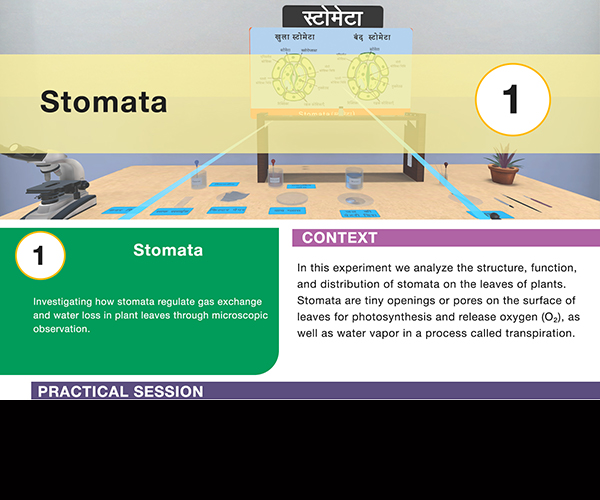
Explore DetailsIn this experiment we analyze the structure, function. and distribution of stomata on the leaves of plants. Stomata are Liny openings or pores on the surface of leaves for photosynthesis and release oxygen (O), as well as water vapor in a process called transpiration
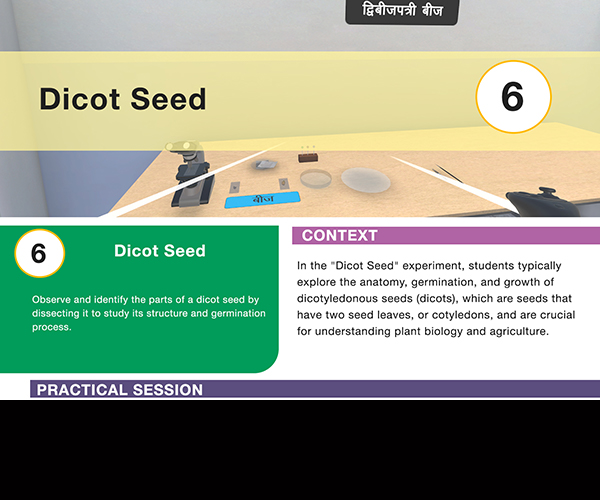
Explore DetailsIn the "Dicot Seed experiment, students typically explore the anatomy, germination, and growth of dicotyledonous seeds (dicots), which are seeds that have two seed leaves, or cotyledons, and are crucial for understanding plant biology and agriculture.
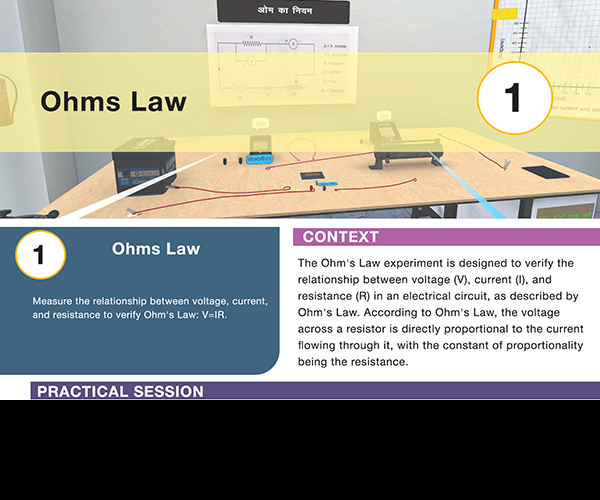
Explore DetailsThe Ohm's Law experiment is designed to verify the relationship between voltage (V), current (II, and resistance (A) in an electrical circuit, as described by Ohm's Law. According to Chms Law, the voltage across a resistor is directly proportional to the current lowing rough L. with the constan. of proportionality being the resistance.
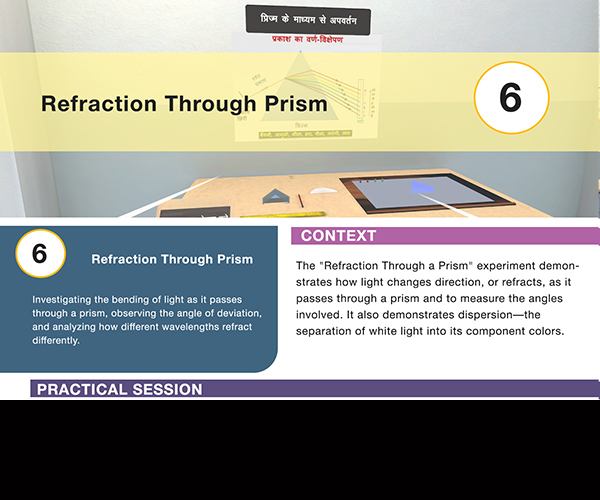
Explore DetailsThe "Refraction Through a Prism experiment demon-strates how light changes direction, or refracts, as it passes through a prism and to measure the angles involved. It also demonstrates dispersion-the separation of white light into its component colors.
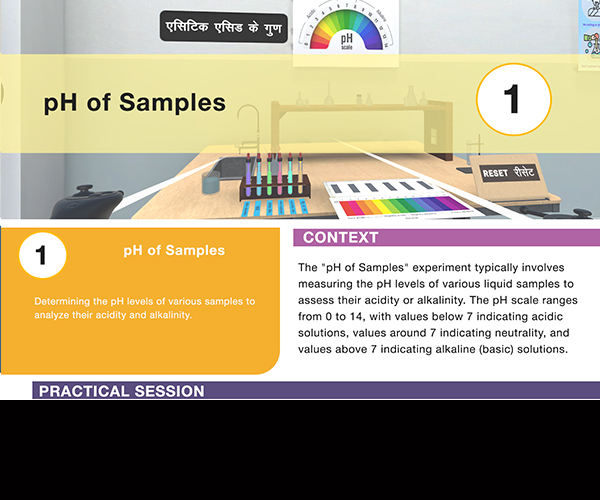
Explore DetailsThe pH of Samples" experiment typically involves measuring the pli levels of various liquid samples to assess the acidity or alkalinity. The off scale ranges from 0 to 11, with values below 7 indicating acidic solutione, values around 7 indicating neutrality, and values above 7 indicating skaline (basici so utions
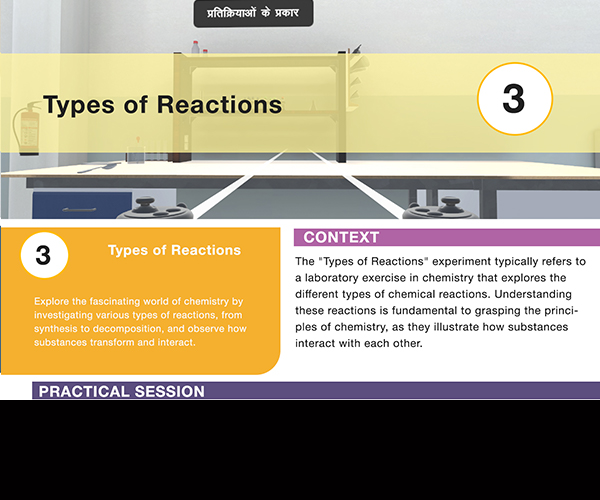
Explore DetailsThe "Types of Reactions" experiment typically refers to a laboratory exercise in chemistry that explores the different types of chemical reactions. Understanding these reactions is fundamental to grasping the princi-ples of chemistry, as they illustrate how substances interact with each other.
Explore Details
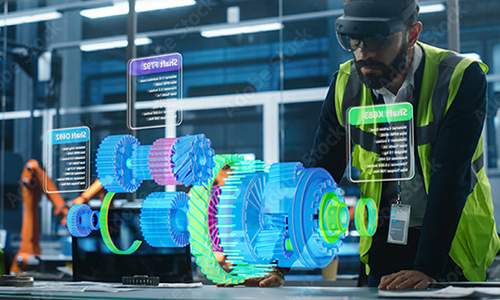
Experience Zone (EZ) bridges the gap between classroom learning and industry requirements by designing immersive, simulation-based training environments. Our XR-driven solutions ensure that learners gain hands-on, practical exposure to skills that are directly relevant to their career paths.
Traditional training often faces challenges such as limited lab infrastructure, high costs of equipment, safety risks, and outdated teaching models. EZ solves these problems with Virtual Reality (VR), Augmented Reality (AR), and Mixed Reality (XR) labs, where students can practice repeatedly, learn safely, and build confidence before entering real-world workplaces.
π How EZ Skill Development Labs Help
Hands-on VR workshops for welding, machining, and fitting to build industry-ready skills.
READ MORE
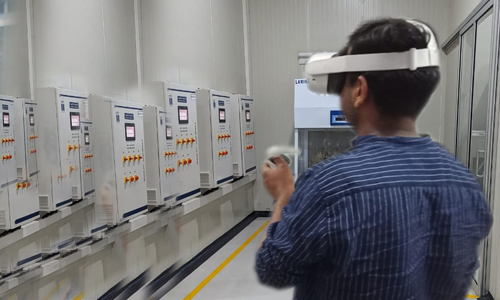
Safe VR training for wiring, circuits, surveying, and construction. Eliminates risks while improving accuracy and confidence
READ MORE
Virtual labs for networking, coding, and hardware assembly. Industry-ready modules that bridge theory with practice.
READ MORE
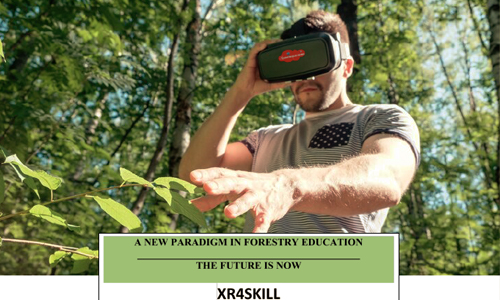
Training in silviculture, plantation, and conservation practices. Immersive simulations for sustainable forest management.
READ MORE
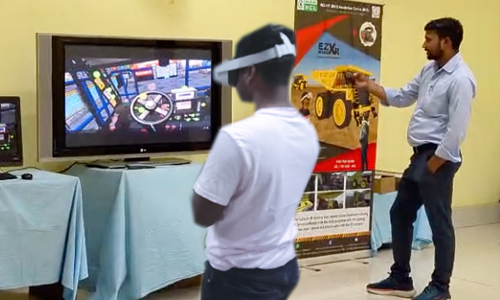
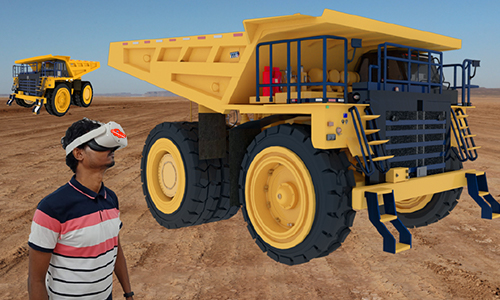
Dumper operations, blasting, and safety drill simulations. Hands-on XR training to ensure safety and efficiency in mines.
READ MOREWe are proud to have collaborated with some of the most respected organizations